
Before You Speak to the Media
If you’ve been impacted by recent disasters, journalists may reach out asking you to share your story.
Speaking out can help show the true scale of disasters, and help lead to government assistance - but it’s always your choice.
You have a right to choose how - or if - you speak.
We’ve created some tips below to help you decide what’s right for you.
You can also contact us to speak with someone experienced in sharing their own story with the media.
-
Advice for people with lived experience considering sharing their experience
Deciding whether to tell your story in the media or for any other project is a process of weighing up the pros and cons. Remember that as part of their work role, those who are soliciting stories to fulfil their job obligations may not be considering, or may not be aware of, the long term consequences of your public storytelling.
Among the benefits of telling personal stories during or after a disaster is that it raises awareness of the scale of the impacts and can result in better government assistance. There are potential downsides though; some people can feel traumatised by their interactions with media, and some can regret the way they were portrayed. By doing some preparation beforehand, you can set yourself up for the best experience.
To help anyone considering telling their story, we have prepared some advice for weighing up your decision, as well as a few tips for being prepared.
Tips for sharing your story with the media
Most journalists do not want to upset you or do any further harm, and want to tell your story in a way that you are comfortable with
Many of them don’t have training in trauma but are very open to learning more and doing the right thing
Even if a journalist asks you directly or has already started asking you questions, you do not have to agree to an interview
You can ask for some time to decide whether you do an interview or not
You can change your mind after agreeing to an interview.
You can change your mind even during an interview. One tip for interrupting an interview is to say “I’d like to take a break and have a glass of water.” Taking a break can give you a chance to consider if you want to skip a question, change topics or whether to continue at all. You could even chat with or call a support person while taking a break.
You can put conditions on accepting an interview, such as the kinds of questions and/or topics you can answer, where and how you will do an interview, who will be present (most journalists will do what they can to make an interview happen, especially for survivors and laypeople).
You can and should ask for an opportunity to review the way the journalist has recorded your story. They may not agree, but if it is a print interview you can ask the journalist to show you the quotes they will attribute to you before they publish their story
When deciding whether to do an interview, consider the effort, energy and emotion that might go into an interview. Will the payoff in sharing your story and key messages at this time with this media outlet be worth it?
Beyond media: Tips for sharing your story with organisations, researchers and other content producers
After the initial disaster subsides you may be approached to tell your story by other organisations including advocacy groups, those conducting research or producing content such as podcasts and documentaries. Many of the tips above apply, but there are some other considerations outlined below. (Borrowed and adapted from Research Into Recovery)
Remember that your participation is voluntary and you can always say no.
Ask yourself, who benefits from you telling your story in this way?
Consider what purpose does sharing your personal story serve?
Ask ahead of time if the interviewer will share a draft with you before publishing to proof-read and fact check the draft of your story. If this isn't possible due to time constraints, ask to at least go over the notes the interviewer has made before your piece is published / broadcast / posted online.
Ask what would happen if you changed your mind about having your story included. Is there a way to withdraw or update your story if things have changed?
If working with large organisations, ask how they will use your story to make material change.
Think of story-telling as an exercise of labour/work. Consider asking if you will get paid (payment can happen in the case of research, podcast or documentary filmmaking, but won't happen for news media). This is particularly relevant the longer your time commitment (including preparation and travel time).
Remember that the internet lasts forever and because of the technology available today, your interview or story will likely be accessible to the public for a very long time, including people you may not wish to see it, such as future employers or landlords.
You do not have to share your real name and could use a pseudonym if you wish.
If possible, speak to someone who has experience with telling their story to hear their advice. (For example, you can contact Bushfire Survivors for Climate Action - we offer peer support to people impacted by bushfires who want to share their stories to push for stronger climate action, and potentially media training.)
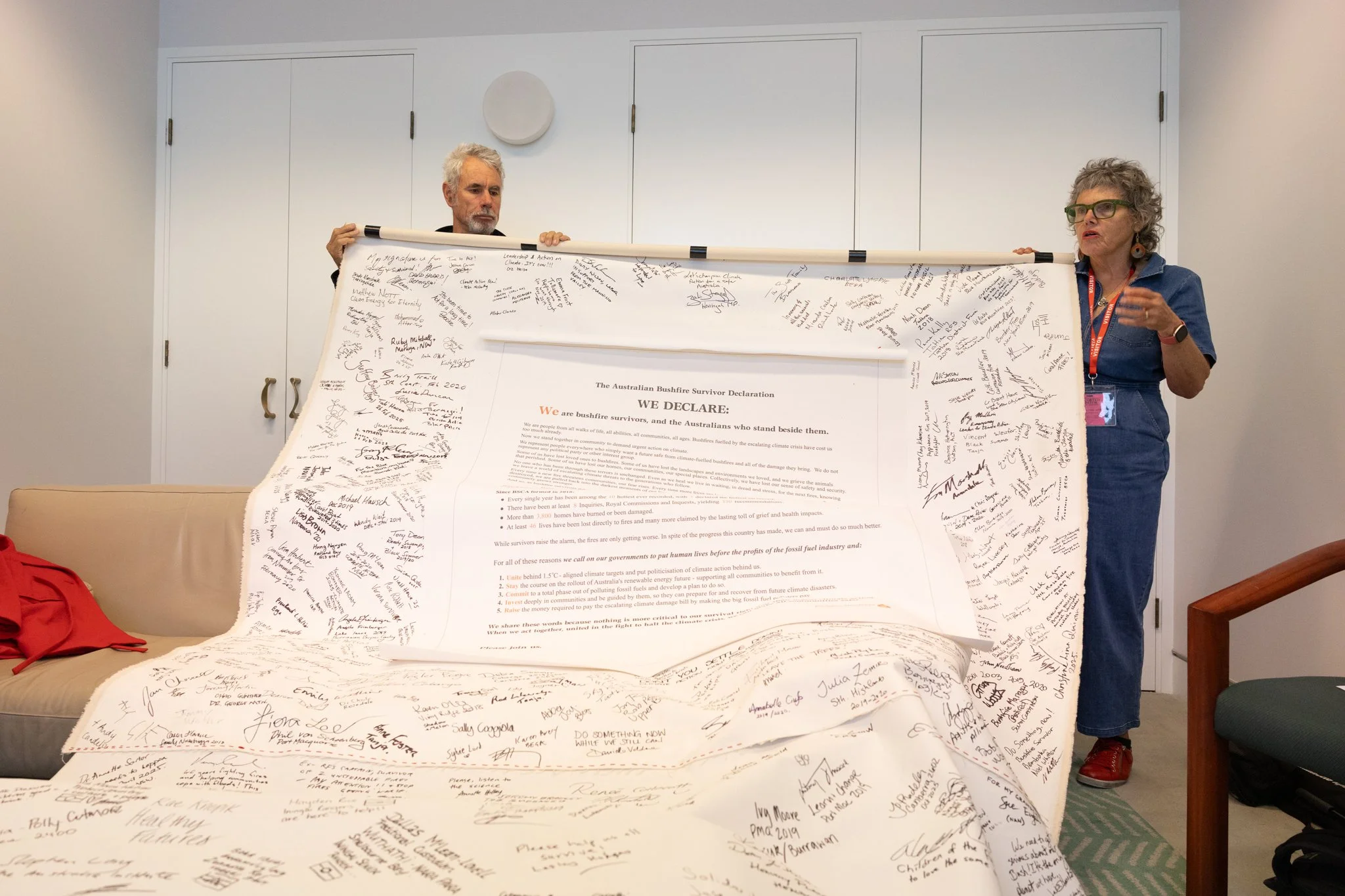
“I know it’s not for everyone, but after losing everything, I’ve found power in speaking out”
Sharing on Social Media
There are many ways to share your story, and different options suit different people.
If social media feels right for you, you can explore our resources below.